Setting up a Market Trading Business
Headings
Trading
Deciding on what to sell
Probably the most important decision you will make as a trader is deciding on what you are going to sell. Many people put a lot of thought, effort and research into this, while others more or less “fall” into selling a particular product or line. The main factors people base their decisions on are:
You see or buy a product you like and you decide you too would like to sell this based on your experience.
This approach needs careful consideration as just because you happen to like a product, it does not necessarily stand that your potential customers will. Research is vital.
You decide to sell a product based on a hobby or interest. This is a common occurrence and, if done correctly, can be very successful as the individual knows the product and has a genuine passion which comes across when selling the products.
It can, however, be a “heart over head” situation whereby just because you believe in and are passionate about a product, your potential customers may not be. Research again, is vital, particularly as many hobbies can have a very limited market.
Many traders will make a very successful living by selling a variety of product lines and have no real interest in particular products other than their profit potential. This revolves around the ability to source varying lines at attractive prices, from a limited range of sources such as liquidation sales, job lots and auctions.
This can, if done correctly be very successful but may involve holding large stock levels as most sales and auctions deal in bulk. It is also vital to be aware of where and when these take place.
Using the popularity of a current band, toy of the latest gadget to sell products is a very popular approach. By linking to a well-known brand or product, you can sell products that are already well known and for which all the marketing and advertising has already been done for you.
Unfortunately, this often causes conflicts over copyright and trademark ownership and can, in extreme cases, result in prosecution in these are infringed.
If you sell a product from one of the two headings above “Its linked to a hobby” or “It is something you like?” you can fall in to a lull where you are selling well and business is good then a year later or even a few months later your product is no longer selling. This is because you product needs a shake up you need to be re-inventing your product change it up sell off old stock.
Like the heading above “It’s popular at the moment!” this can be incorporated in your sales by simply creating a “on trend item”
What do you mean?
Well one of our members had a great idea to create a bath bomb on latest craze “Prime”.
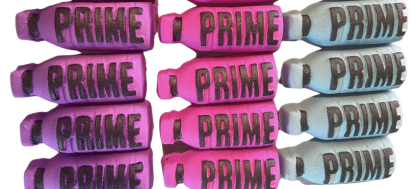
This was a great idea bring people over to the stand to see what was on offer and create a conversation starter.

Trading
Finding a location
After your products, the location you choose to trade is among the most important decisions you may have to make. In many cases, this can be strongly linked with your products as quite often, a product which sells quite well in one location may not in another (i.e. artisan cheese in a farmers market in west cork or in a general market in an industrial unit in suburban Dublin).
Choosing location can be much more important to certain products than others (see example above) and in many cases, may have little or no impact. However, location comes into play in these cases when it becomes apparent that a particular location is already saturated with your product. In this instance, it is likely you will have to investigate alternative trading locations in order to provide a satisfactory income.
Where you decide to trade should never be an arbitrary decision. Careful research into a number of potential locations will give you a good feel for a number of factors on which to base your decision such as:There are many different types of locations to trade and sell your goods or advertise your business.
We have 13 examples of the different locations you can trade at for your business that you can generate income and notice to your business.
It is important to find out what the footfall is like at a market or event.
How many customers compared to the amount of traders.
(If possible) I would visit the market or event to gage the foot fall, type of customers and who is sell what are there others selling something similar to my product.
What do you mean type of customer?
When attending a market or event you should find out the type of customer in order to see if its the right fit for you or to see if you need to adapt your products.
Examples;
- Some markets have lots of older customers.
- Some may have family’s young children.
- Some maybe tourist focused
- Are higher rent charges in one location reflective of increased customer number or spend?
- Have you enough stock to cover all cost and make a profit?
- You should create a projection to limit the possibility of making a loss.
What facilities are available, electricity, water, indoor areas, toilets etc?
What is important to you?
- Toilets can be an issue for street traders. However, if you are at a destination toilets should be provided.
- Did you pack a lunch or are there onsite food units?
- Do you require electricity for your business?
- Do you require water for your business or weights for your gazebo?
- Do you need to be indoors for the Irish weather?
Trading
Product Presentation
When you go into a supermarket, do you notice how products are presented, either on the shelves or in counter displays? This is not done randomly, or purely to look attractive. It is a hugely scientific process centred around maximising profitability through the placing of the right product in the right location, such as placing the most profitable items at eye level on shelves where they will sell better than other items,” eye level is buy level”.
Products should be arranged in such a way that you allocate space to products in proportion to the amount of sales those products generate. E.g. If product A accounts for 20% of your sales, it should therefore have 20% of the total available space. You also need to identify your “best-selling” space, the part of your stall where products sell best.
Different types of stalls (kiosk, walk in, counter) have different noticeable display areas but in general the highest impact areas are:
- Front of stall, in the centre
- Sides
- Rear Wall
There are many different types of signage varying from name/fascia (your main sign displaying your name or product) to promotional signage (used to highlight a specific product/range). From the customer’s point of view, signage should be:
- Clear yet informative
- In good condition
- Not hidden or obscured by products or other signs
In many cases, a customer’s first impression of your stall and products sets the value tone. If the customer thinks “cheap” on their first impression, then the prices need to be cheap, or anything else will seem wildly expensive. If the first impression makes the customer think professional, good, clean etc., then they will expect your prices to reflect this also. They will perceive your stall as offering good value, even if prices are a bit above the competition. Key points to take into consideration are:
- Make sure the stall is in good condition, nothing broken, torn or damaged. Replace torn or ripped covers or tarpaulins immediately.
- Ensure the stall is clean and tidy at all times.
- Check that your fascia and other signage is clean, noticeable and free of damage.
- If the stall has lighting, ensure all bulbs are operational, replace blown lights immediately.
Trailers – As with a stall, a trailer provides a customer’s first impression of your business and will determine what standard they expect from you. All points relating to a stall are also applicable to trailers with a few additional points.
- Trailers are more often than not, food businesses, so it is vitally important that a perception of cleanliness is maintained at all times. Keep the outside of your trailer clean at all times, wash down frequently and ensure all visible working parks (tyres, lights etc.) are in good working order.
- Trailers are, in themselves, a great means of advertising. By having a colourful, attractive exterior, you can create a great impression among customers. It is also a very convenient place to locate advertising, pricing and other promotional signage.
- Prominently display awards, approvals and licences in locations visible to customers as this will show you are a well-run and properly licenced business
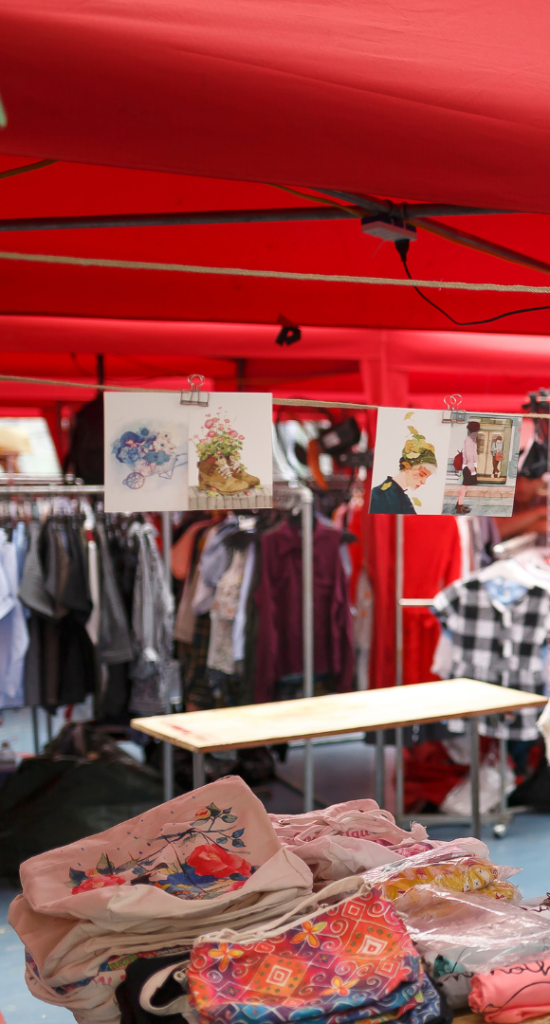
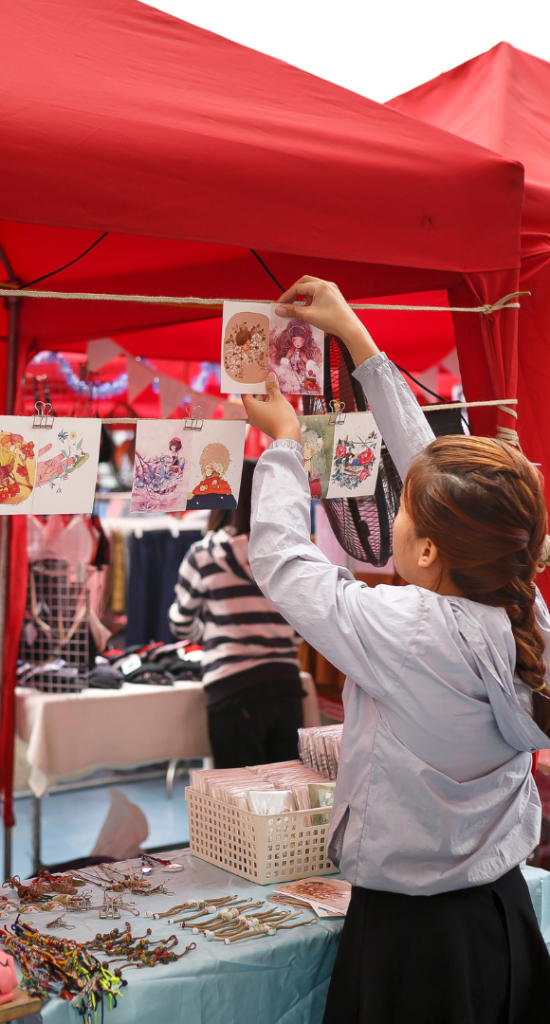
There are many different types of stalls to set up for your business. For examples of the different ways you can set up to trade from.


Trading
Customer Service
Good customer service is about satisfying your customers. Excellent customer service is about being better than your customer expect you to be.
The levels of customer service that you provide will directly influence your sales through repeat business, increased sales and word of mouth. It is not only about what you say to customers but what they see and hear, your attitude, mannerisms and knowledge.
- Politely ask questions to clarify the situation
- Avoid blaming or interrogating
- Deal with need for proof of purchase politely (this can be tricky without receipts given)
- Do not frown or sigh while dealing with customer
- Resolve the complaint on the spot if possible
- Apologise for any inconvenience
- Keep the customer informed and deal with the problem as a priority
While not a traditional bricks and mortar shops, market traders are still bound by legal requirements such as the Sale of Goods & Supply of Services Act 1980. As such customers can expect goods of a certain quality and are entitled to replacement/refund if the goods do not meet these standards. Having an adequate refund/repair policy is a good way to provide excellent customer service. While many traders do not, as a matter of course, issue receipts, it is recommended in many cases and vital for any high value goods.
- Deal with need for proof of purchase politely
- Listen to customers problem attentively
- Carefully consider your response
- Be honest about length of any repair time
- Speak gently and politely at all times, particularly if customer becomes irritated or angry. Never become involved in an argument or shouting match.
Customers nowadays are often very knowledgeable about their legal rights. Under law, responsibility for any fault or complaint lies with you, the stall holder, not the manufacturer. For many goods imported from outside the EU, you are deemed to be the manufacturer too!! Customers are allowed a “reasonable” amount of time to check that goods are satisfactory. A customer can request a repair or replacement but is also entitled to a full refund if the goods are faulty. Having Products Liability Insurance is also vital to protect against any third party claims for injury suffered as a result of faulty goods.
- Guarantee
- Warranty
- Sell by date
- Use by date
- Best before
- Date
A working knowledge of the Sale of Goods and Supply of Services Act 1980 is also useful.

Trading
Marketing
These means have varying pros and cons.
Word of Mouth can be very effective and has little or no cost but, especially when starting out, it can be difficult to make people aware of you and your products without some additional form of advertising.
Online is probably the most popular method being used by start-ups nowadays as it is relatively cheap, can reach a wide audience and can be targeted at specific groups. However as almost everyone uses these means nowadays, it is extremely important to put together a campaign that makes you stand out from the rest.
Print media was traditionally the most reliable form of advertising and can, in many instances, still prove extremely effective. In recent years it has largely been replaced by online means, mainly due to price and the inability to target customers as effectively. It is however the most expensive option and careful consideration needs to be given as to whether the potential returns justify the additional outlay.
The ideal approach is a tailored combination of all three, specifically depending on your product range such as high tech electronics would likely appeal to web savvy, younger age groups whereas a product aimed at older customers may be more suited to print.
A wide variety of factors have to be considered when deciding the correct price you decide to sell your product for such as cost of the product, costs to trade (market rent, wages), price expected by the customer and current economic situation. Before starting, research other traders selling similar products and ask yourself the following:
- What are they charging for these products
- Do these traders appear to be offering value for money
- Are your prices (current or planned) competitive
- To be competitive, do you need to be cheaper
Regardless of what price your competitors sell at, you must be in a position to sell at a price that allows you to make a profit once all costs have been covered. If you cannot do this, it may be time to look at alternative product lines. You don’t necessarily need to be cheaper than the competition however if you are higher, you need a strong reason to justify this and it needs to be communicated to customers (product presentation, superior service, something extra that competition does not offer).
A promotion is when a product or service is given greater prominence to make it stand out from the rest of the range and give customers an added incentive to buy. Examples include:
- Advertising
- Sponsorship
- Signage & Graphics
- Tasting and Sampling
If successful, a promotion will successfully highlight a specific product/range, increase sales and highlight your stall. To ensure a successful promotional camapaign, make sure any posters, price tickets, displays and staff are using a consistent, simple message. Do not attempt too many promotions at once as it will make the stall look cluttered and untidy and also reduce the perceived values of all the other promotions you run. Successful promotions must be planned, with a number of key points to take into consideration such as:
- Start and End date
- Do you have sufficient product to last promotion run
- Have you sufficient promotional material (banners, posters etc)
- Where is promotional material to be displayed for best effect
- Are there timing factors such as seasonal considerations or other events (i.e. world cup/ olympics) to be taken into account.
Making customers aware of you and your products is vital if you are to succeed. It is important to formulate an effective advertising campaign in order to properly promote your business. This can be done through a number of means:
- Word of Mouth
- Online (website, social media sites, facebook etc…)
- Print (leaflets, newspaper adverts)

Trading
Bookkeeping
Book keeping, Accounts and Requirements –
More than ever before, it is extremely important to maintain proper financial records and comply with current health and safety, insurance and legal requirements.
Accurate accounts should be maintained at all times. This is assisted by keeping detailed records of costs, sales and other business expenses. Not only will this assist when preparing year end accounts, it also helps you identify the financial strengths and weaknesses and overall performance of your business. Nowadays, there are many inexpensive and simple to use computer accounting packages on the market. Many organisations also run cost effective, or indeed free, small business accounting courses throughout the country. Should you have neither the time nor inclination to do this yourself, small business accounts can be maintained by any competent accountant, ask other traders for recommendations.
Following on from preparation of accounts, all businesses, be they sole traders or a ltd company, must submit an annual return to the revenue commissioners. Periodic returns may also have to be made for VAT, PRSI and USC depending on the structure of your business, if you have employees for example. In most cases it is advisable to use the services of an accountant to assist in making returns as incorrectly making a return can result in subsequent audits, fines and penalties and, in extreme cases, prosecution.
Insurance has become an integral part of market and event trading in recent years and it is now a necessary cost to be incurred. Market and Event operators should require all traders to hold Public Liability insurance in the event of any claims by members of the public for injury or loss. Should you sell food products, Products Liability should automatically be included, check the small print to confirm that it is and the exact scope of cover. If you have employees, an Employers Liability policy is also advisable. Numerous additional insurances are available from Accidental Damage, Fire. Consult IOMST to find out which are applicable to you and to explain the differences between the various products. While it is not a cost anybody enjoys paying, ultimately it protects both you and your business from claims and suits which could easily ruin you financially.
Depending on what you sell, registration with a state authority, such as the HSE, and compliance with standards set out by them in relation to your business come into force. Mainly surrounding food production and preparation, the requirements can vary and it is vital to ensure that you comply with all the relevant legislation. Failure to do so can result in fines, sanctions and ultimately closure. In extreme cases, if you are deemed to be putting the public at risk, criminal prosecution can follow.

Trading
Monitoring, Reporting and Forecasting
Monitoring, Reporting and Forecasting –
So now you’ve started your business and have been trading away nicely, what’s next? Firstly, you need to be able to accurately work out how the business is performing. This will allow you to improve performance, identify problems and ultimately increase profitability. There are typically four key pieces of information:
Recording sales allows you to identify busiest trading days, times of year, locations and enable you to compare performance over different time periods. It can also assist in planning stock and staffing levels and promotions.
This is an important indicator of busiest days which sales alone may not always make apparent (i.e. one large sale can skew results). Knowing this will enable you to see how well your stall is performing at peak periods or if there is room for improvements such whether or not you have sufficient staff. It also allows you to record your average transaction value
This is the average amount spent per transaction/visit. The ATV allows you to monitor the effectiveness of the way your business is operated and calculate the effect of any changes. One of the goals of any business should be to increase this figure at every opportunity.
A well known rule of retailing is the 80/20 rule that 80% of sales come from 20% of product lines. Analysing sales by product line identifies the best sellers, the products that provide the majority of sales from just a handful of products. Knowing what these are allows you to:
- Make sure you have sufficient stock of these lines
- They are given a prominent location, are attractive and easy to see
- Tell customers about them (verbally and through signage)
- Find, source, buy, make and sell more of the same
It is very important that a trader keeps some of the surplus money (profits) as cash flow. This ensures that a trader has sufficient cash to buy more stock or deal with an unexpected expense or emergency. Negotiating with suppliers for credit terms and not overspending positive cash flow will help maintain a positive cash flow. This can also be used to help to grow the business for when a new product or opportunity arises. Ultimately however, if a trader doesn’t have a positive cash flow, they don’t have an ongoing business venture. While the preparation of year end accounts will in many cases demonstrate the financial health of your business, there are some simple tools which allow you to maintain and identify the current situation at any particular point.
This is a financial statement of a business and shows the businesses revenues and expenses during a particular period. It indicates how the revenues (money received from the sale of products and services before expenses are taken out, also known as the “top line”) are transformed into the net income (the result after all revenues and expenses have been accounted for, also known as “net profit” or the “bottom line”). It displays the revenues recognized for a specific period, and the cost and expenses charged against these revenues. The purpose of the income statement is to show whether the company made or lost money during the period being reported.
| Total Sales | Cost of Sales (Purchases) | Gross Profit | Expensess | Net proffit |
|---|---|---|---|---|
|
10,000 |
5,000 |
5,000 |
3,000 |
2,000 |

Trading
Trading Locations – Legalities and Requirements
Trading Locations – Legalities and Requirements
Depending on whether you intend to trade in a public area or on private ground, there are different requirements which must be followed.
These area are classed as public and come under the Casual Trading Act and local authority bye laws. A casual trading licence is required in order to trade in any of these locations which is issued by the relevant local authority (council, corporation). These licences are only issued for designated locations and do not entitle a holder to trade anywhere in the local authority area. These licences are generally quite limited in supply and can be hard to get. You would need a tax clearance certificate and the relevant insurance in place in order to apply for a licence.
These are far and away the most common and definitely the easiest to get started from. No licence is required but you will still need the relevant insurance cover, Public Liability, Products Liability (Food) and if you have employees/workers, then Employers Liability also. There would be many of these around and it would be advisable to check around and see if any of them have openings or are looking for traders like you as many will not accept too many of the same product.
It would also be advisable to prepare a safety statement which we can assist members with.